Mastering transplanting cannabis is a crucial step in ensuring vigorous growth and maximizing yield. Whether you’re moving seedlings from starter pots to larger containers or hardening off young plants for outdoor beds, timing and technique can make all the difference. In this guide, you’ll learn how to recognize the ideal moment to transplant, prepare your plants and soil for a seamless transition, and implement best practices that minimize stress and root shock. By following these expert tips on transplanting cannabis, you’ll set the stage for healthy roots, robust foliage, and a thriving cannabis garden.
What Is Transplanting Cannabis?
Transplanting cannabis refers to the process of moving young cannabis seedlings from their initial, smaller containers into larger pots or directly into the ground. This step allows roots more room to grow, supports increased nutrient uptake, and promotes stronger, healthier plants. Proper transplanting reduces root-bound issues—where roots circle the pot and choke each other—and ensures optimal aeration and drainage in the new medium.
Successful transplanting cannabis hinges on gentle handling: disturbing the root ball as little as possible and planting at the correct depth so the first set of true leaves sits just above the soil line. With the right preparation and timing, transplanting can give your cannabis plants the vital boost they need during the critical vegetative stage.
Signs Your Cannabis Seedlings Are Ready to Transplant
Knowing when to tackle transplanting cannabis ensures you move seedlings at their peak vigor. Watch for these key indicators:
- True Leaves Count: Seedlings should have at least 3–4 sets of true leaves (not including the initial cotyledons), signaling they’ve entered a stable vegetative phase.
- Robust Root Development: Gently lift the seedling; a healthy plant will show white, fibrous roots beginning to circle the pot’s perimeter without being completely root-bound.
- Sturdy Stem and Node Spacing: Look for a thick, upright stem and well-spaced nodes—signs your seedling can support added soil weight and handle minor transplant stress.
- Pot Size and Stability: If the seedling wobbles in its current container or roots start emerging from drainage holes, it’s time to give it more room through transplanting cannabis.
Best Timing for Transplanting Cannabis Seedlings
Choosing the right moment for transplanting cannabis depends on environmental conditions and plant readiness. Ideally, transplant when:
- Temperature: Daytime temperatures consistently range between 20–25 °C and nighttime lows stay above 15 °C to avoid shock.
- Light Cycle: Seedlings have received at least 16 hours of light per day indoors or are acclimated to outdoor light levels for a minimum of one week.
- Soil Moisture: The root zone is slightly moist but not waterlogged; overly wet soil increases risk of root rot after transplant.
By aligning transplanting cannabis with optimal temperature and light, you ensure seedlings encounter minimal stress and quickly resume vigorous growth in their new home.
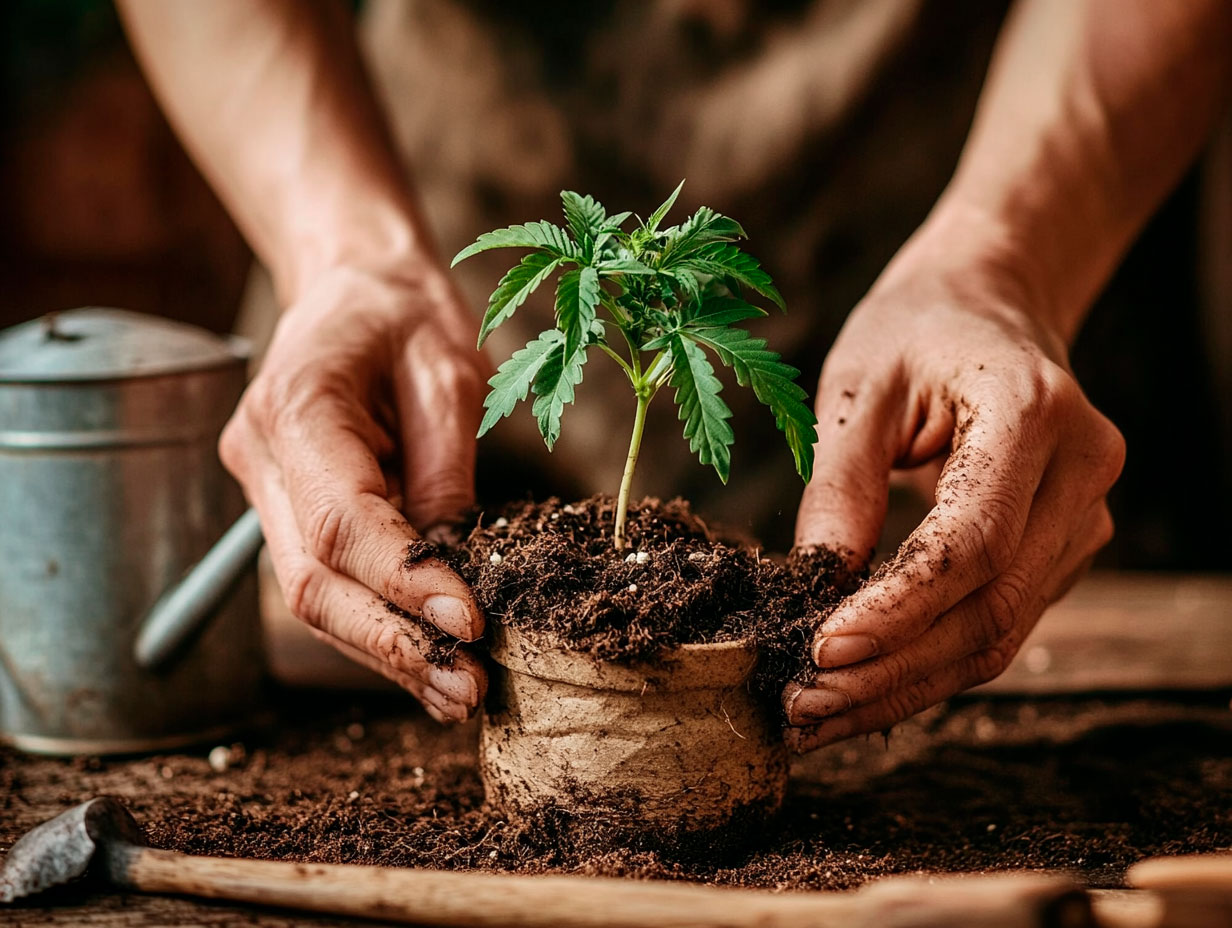
Step-by-Step Guide to Transplanting Cannabis
1. Preparing the New Container or Outdoor Bed
Select a pot at least twice the volume of the starter container, filled with high-quality potting mix or amended garden soil. Ensure good drainage by adding perlite or coarse sand. If transplanting outdoors, enrich the planting hole with compost and aged manure to provide a nutrient-rich buffer.
2. Removing Seedlings from Starter Pots
Water seedlings 1–2 hours before transplant to keep soil intact. Gently squeeze the sides of the pot and invert it, supporting the seedling at the base of the stem. Carefully ease out the root ball, avoiding tugging or shaking that can damage fine roots.
3. Planting and Aftercare
Place the seedling so its root crown sits just below the soil surface, then backfill and gently firm the soil around the stem. Water lightly to settle the soil and eliminate air pockets. Provide shade or reduced light intensity for 24 hours if moving outdoors. Monitor moisture daily, watering when the top 2 cm of soil feels dry, and avoid fertilizing for 3–5 days to let roots recover.
Common Mistakes and How to Avoid Them
- Transplanting Too Early or Too Late: Moving seedlings before they develop sufficient roots can cause stunted growth, while waiting too long leads to root-bound plants. Aim for 3–4 true leaves and roots just beginning to circle the pot.
- Overwatering After Transplant: Excess water drowns roots and invites fungal issues. Allow the top 2 cm of soil to dry before watering and use pots with adequate drainage holes.
- Poor Soil Aeration: Dense or compacted soil restricts root expansion. Mix in perlite, coco coir, or coarse sand to maintain a light, airy medium.
- Not Hardening Off Outdoors: Direct sun and wind can shock indoor-grown seedlings. Gradually expose plants to outdoor conditions over 5–7 days, increasing light and airflow incrementally.
- Fertilizing Immediately: Freshly transplanted roots need time to recover. Wait 3–5 days before applying any nutrient solution to prevent root burn.
Advanced Tips for Successful Transplanting Cannabis
Enhance your transplanting cannabis success with these pro techniques:
- Root Stimulants: Dip bare roots in a solution containing kelp extract or humic acid to encourage rapid new root growth.
- Mycorrhizal Inoculation: Add a mycorrhizae blend around the root zone to establish symbiotic fungal networks that improve nutrient uptake.
- Transplant Timing: Perform transplants in the early morning or late afternoon to avoid peak heat and light stress.
- Protective Covers: Use shade cloth or row covers for outdoor transplants during the first 24–48 hours to buffer wind and intense sun.
- Companion Planting: Interplant with marigolds or basil to deter pests and promote a healthy microclimate around young transplants.
Conclusion: Mastering Transplanting Cannabis Seedlings
Effective transplanting cannabis combines timely action, gentle handling, and thoughtful preparation. By recognizing seedling readiness, aligning with ideal environmental conditions, and employing best practices—from proper soil mix to advanced microbial and root stimulant applications—you can minimize stress and promote vigorous root and foliage development. Avoid common pitfalls like overwatering and inadequate hardening off, and leverage advanced tips to further boost transplant success. With these techniques, your cannabis seedlings will thrive in their new homes, setting the stage for robust vegetative growth and abundant flowering.
For an academic overview of seedling development and best transplanting practices, see the Penn State Extension article “Seed and Seedling Biology”: Penn State Extension – Seed and Seedling Biology.